Three-Minute Warning
You have 30 minutes to show the house. You may have three minutes to sell it.
There’s an uncomfortable truth about selling a home:
Buyers are judging your house before they’ve seen most of it.
They may spend 30 or 40 minutes at a showing. They may inspect the appliances, open closets, walk through the primary bath, stand in the backyard and debate whether their sectional will fit in the family room.
But buyers may take 30 minutes to see your house. They don't take 30 minutes to decide how they feel about it.
The house may not have 30 minutes to win them over....It may have three!
I call it The Three-Minute Warning.
From the moment buyers pull up to the house through their first few steps inside, they are forming a narrative.
This is beautiful. This feels dated. They’ve really taken care of this place. This is going to need work.
And once that first impression takes hold, everything they see afterward tends to reinforce it.
Buyers are remarkably forgiving once they like a house. Unfortunately, they're equally talented at finding problems once they don't.
Minute One: The Curb
Your showing starts before the showing. Buyers notice the landscaping, driveway, garage doors, paint, roofline, walkway and front entrance. They may not consciously inventory every detail. Instead, the brain does something much faster: well maintained, or needs work.
That’s why I start preparing a home where the buyer starts: outside.
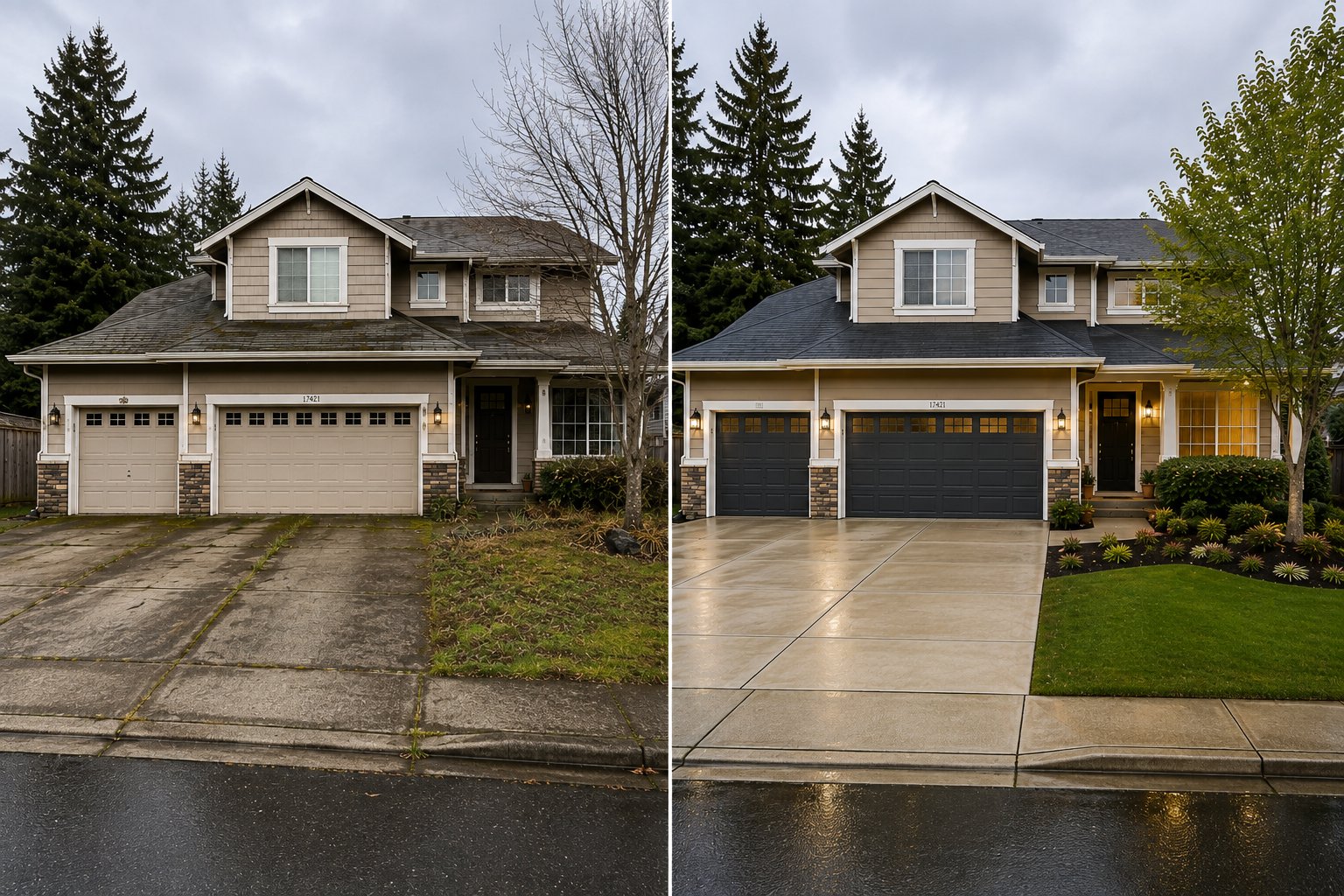 Start With the Garage Doors
On many homes, particularly newer suburban homes, the garage doors occupy a surprisingly large percentage of the front elevation. If your garage doors occupy half the front of the house, they are no longer a minor detail. They are architecture.
Yet they’re one of the easiest things for homeowners to stop noticing after living with them for years. Buyers haven’t. If they’re dirty, faded, dented or damaged, they can make the entire exterior feel tired.
That doesn’t necessarily mean replacing them. Clean them. Repair a damaged panel if practical. Touch up chipped or worn paint. Make sure the trim is in good condition. If the color is fighting with the rest of the house, consider repainting them.
The objective isn’t to make buyers admire your garage doors. It’s to make sure they don’t notice them for the wrong reason.
While you’re there, look down. Pressure washing a dirty or mossy driveway and walkway can make the entire property look newer for surprisingly little money. Moss may be practically indigenous to the Pacific Northwest. It still doesn’t need to be part of the listing.
Now Walk to the Front Door
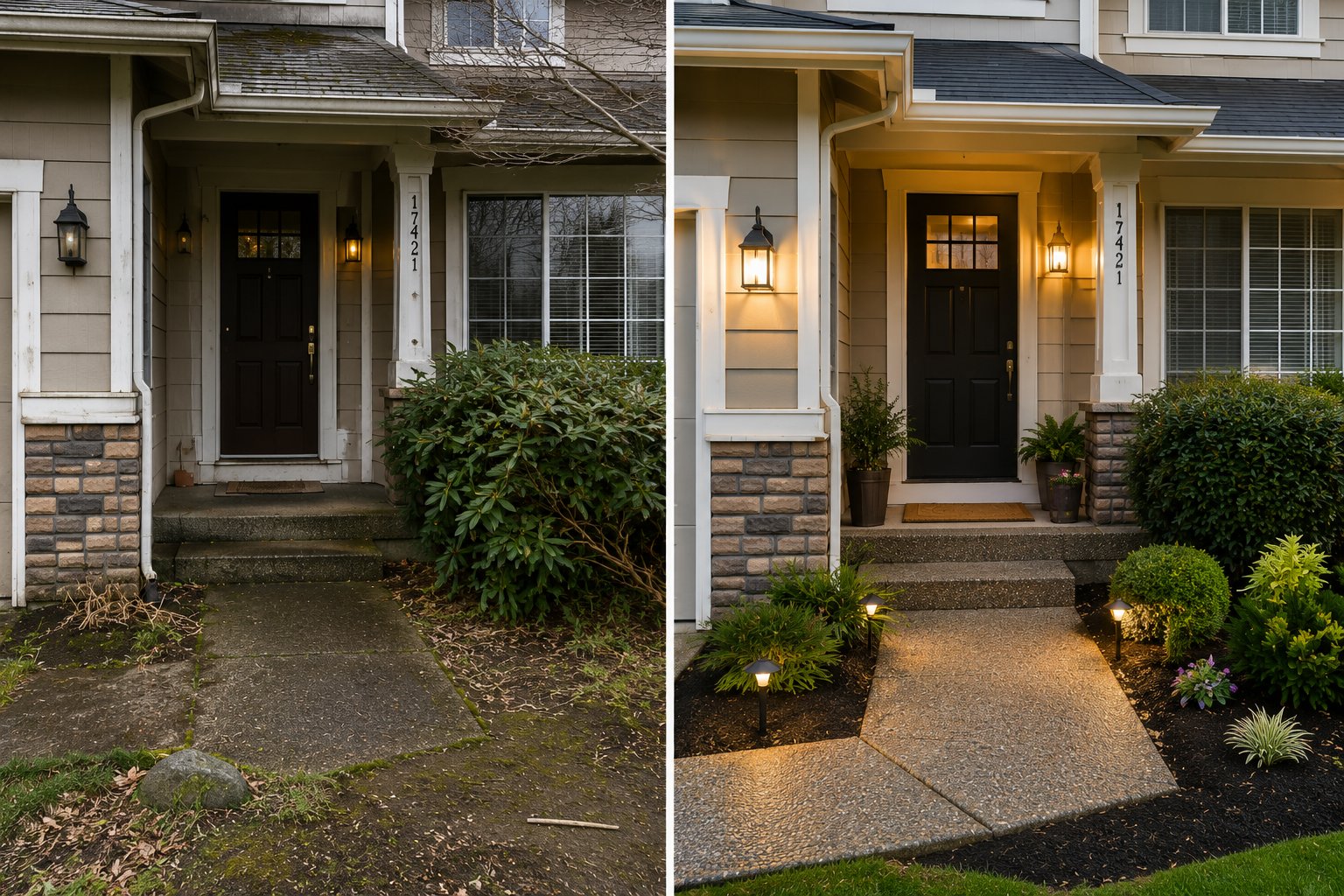
Make the same walk a buyer will make. Are shrubs covering windows? Are branches intruding into the walkway? Is there moss on the concrete? Is the porch light dated or weathered? Is the front door faded? Is the hardware scratched or tarnished? And what condition is the doormat in?
Nothing says welcome to your $2 million home quite like stepping over something that has survived six Seattle winters.
Then there’s one almost everyone overlooks: the doorbell. A yellowed plastic doorbell sitting next to freshly painted trim sends an odd little message. You’ve spent thousands preparing a home and left a $25 object announcing its age.
None of these things individually sells a house. Together, however, they communicate something important: this house has been cared for.
A freshly painted front door, clean or updated hardware, a new mat and one or two appropriately scaled planters can completely change the approach. Don’t overdo it. The entrance should feel intentional, not like the garden center was having a clearance sale.
Minute Two: The Door Opens
This may be the most important moment of the showing. The buyer walks through the front door. Within seconds they’re processing light, flooring, paint, ceiling height, furniture, smell, temperature and whatever sits directly in their first major sightline.
Nobody is standing there calculating price per square foot. They’re reacting. Does it feel bright? Spacious? Current? Clean? Does it feel like somewhere they’d like to live?
This is where fresh paint, clean or refinished flooring, updated lighting and professional staging can have an outsized impact. They don’t simply improve individual rooms. They influence how the buyer interprets the entire house.
Minute Three: Now They’re Looking for Evidence
This is where buyer psychology gets interesting. Suppose the buyer already likes the house. They walk into a bathroom that hasn’t been updated in 20 years. Their reaction might be: “We can do this later.”
Now imagine the buyer entered the house already thinking it felt tired. They see exactly the same bathroom: “Another thing we have to remodel.”
Nothing about the bathroom changed. The context did.
That’s why preparing a home for sale shouldn’t simply be a checklist of renovations. The objective is to control the sequence of impressions. Get enough of those early impressions right and buyers tend to forgive what comes later. Get them wrong and suddenly they’re inspecting grout.
Don’t Remodel a Good Kitchen
Ask almost anyone which room you should update before selling and you’ll hear the same answer: the kitchen. Sometimes that’s absolutely right. But sometimes it’s a very expensive answer to the wrong question.
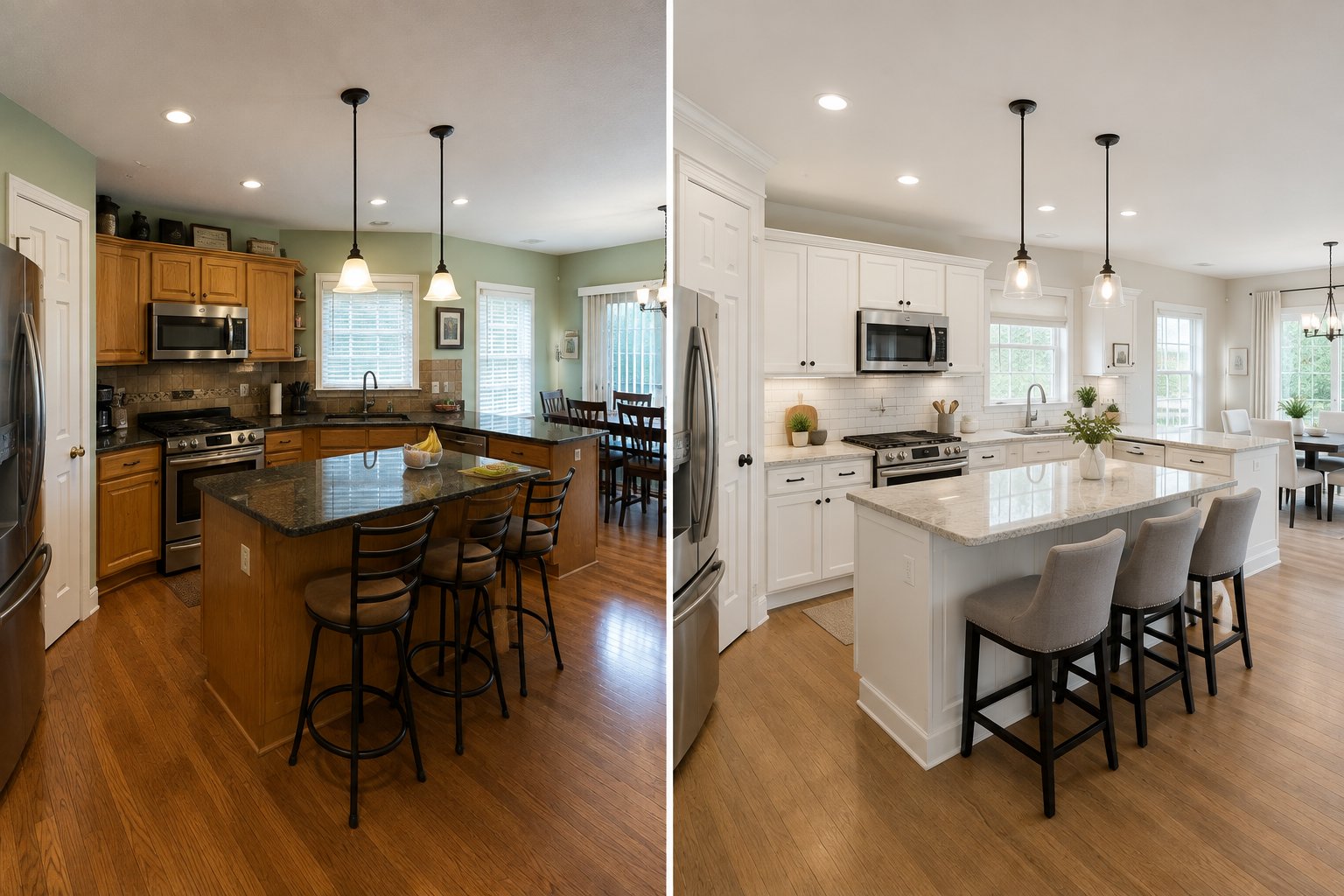
Suppose the kitchen is attractive, functional and reasonably current, but the cabinet doors and drawer fronts have worn edges from years of use. That’s not necessarily a dated kitchen. It’s a good kitchen showing some wear.
Don’t confuse wear with obsolescence.
If the cabinetry itself is good, investigate having worn edges professionally touched up or refinished rather than replacing or painting everything. Adjust crooked cabinet doors. Fix loose hinges. Repair drawers that don’t glide properly. Clean the areas around pulls. Polish or replace tired hardware. Replace cracked or discolored caulk around the sink and countertops.
Make sure every light works, particularly under-cabinet lighting, and that the bulbs aren’t an assortment of different colors. Then clear the counters.
A coffee maker and perhaps one or two attractive objects are fine. The toaster, blender, knife block, vitamins, air fryer and Costco-sized olive oil do not all need starring roles in the listing photos.
Counter space looks considerably larger when buyers can actually see it. The sink and faucet deserve attention, too. If they’re badly worn while the rest of the kitchen looks good, replacing them can sometimes provide far more visual impact than a much larger project.
The goal isn’t for buyers to walk into the kitchen and say, “They remodeled this.” It’s for them to think, “This kitchen is in great shape.” That’s a much less expensive objective.
The objective isn’t to win a remodeling competition. It’s to sell the house.
Open the Pantry Door
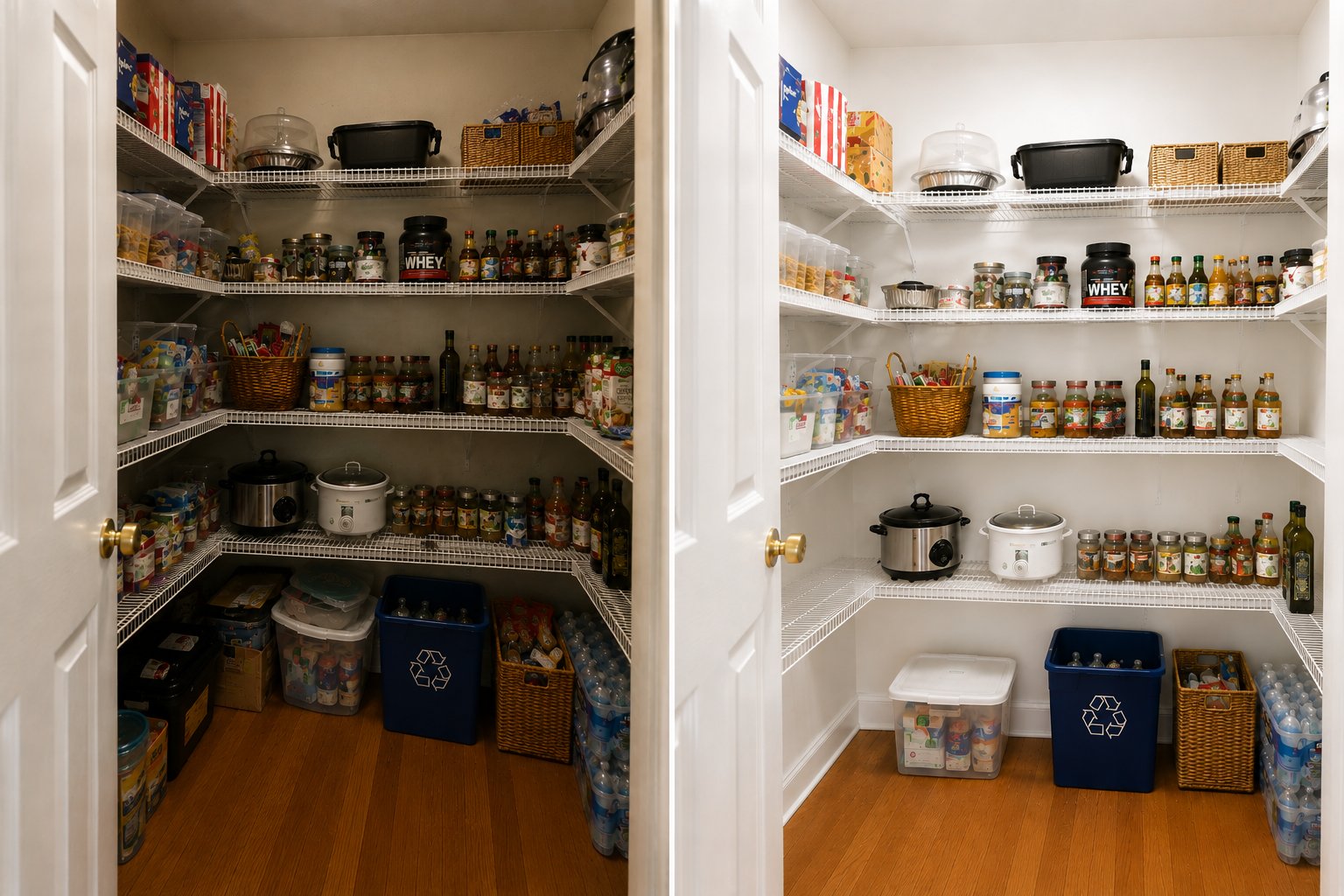
If the house has a walk-in pantry, that’s a selling feature. So sell it. And here’s one of the simplest pre-listing improvements I know: paint it.
Paint does wonders in a pantry.
Pantry walls and shelves take a beating. Cans get dragged across shelves, appliances leave marks, corners get chipped and walls get scuffed. Put them all together in a small space and they can make the pantry, and sometimes the kitchen around it, feel older than it really is.
Fresh paint on the walls and especially the shelving can make an ordinary pantry look almost new. Then edit what’s inside.
Remove the bulk packages, excess appliances, shopping bags and the 24-pack of paper towels preparing for the next global emergency.
You don’t need a Pinterest pantry with 47 matching glass jars labeled in calligraphy. You need buyers to be able to see the shelves.
A completely full pantry can work against you. Instead of demonstrating abundant storage, it can suggest that the house doesn’t have enough. Remove perhaps 25% to 30% of what’s there. Leave some empty shelf space. Clean the floor and baseboards. Make sure the light is bright.
And most importantly, make sure buyers can actually walk into the walk-in pantry. Fresh paint. Good lighting. Less stuff. For relatively little money, a tired storage room suddenly becomes a feature buyers remember.
 Buyers Don’t Price Renovations Like Contractors
If something needs $20,000 worth of work, buyers don’t necessarily reduce their mental value of the house by $20,000. They may subtract $40,000. Or $50,000.
They’re not just buying the renovation. They’re buying contractors, decisions, delays, uncertainty, dust and the possibility that the $20,000 project becomes a $35,000 project. They’re also imagining themselves living through it.
Nobody has ever toured a house and thought, “I really hope we get to spend our first six Saturdays meeting subcontractors.”
That’s why eliminating the perception of a project can sometimes be more valuable than completing the project itself.
Follow the Buyer’s Feet
Before deciding where to spend money preparing a house for market, start at the street. Look at the house. Walk up the driveway. Look at the garage doors. Walk toward the entrance. Stop at the front door. Open it. Look straight ahead. Then walk the natural path through the main living space and toward the kitchen.
At every stage, ask one question: What does my eye go to first?
If it’s something positive, great. If it’s a damaged garage panel, peeling front door, scratched floor, dated light fixture, worn cabinet edge or overflowing pantry, that’s probably where I’d start. Not because every imperfection needs to be fixed. It doesn’t.
Don’t Update Everything. Update the Right Things.
When I walk through a property before listing it, I’m not looking for everything that could possibly be improved. Almost every house has that list. I’m looking for the things that will change how a buyer experiences the property.
Where does their eye go when they enter? What’s the first impressive moment? Where does the house suddenly start feeling dated? And at what point might enthusiasm turn into objection? That’s where preparation dollars can have the greatest leverage.
A seller can spend $75,000 remodeling a perfectly functional kitchen and still have buyers walk up to a damaged garage door, step over a mossy walkway and open a tired front door. Or that seller can spend a fraction of the money addressing the things buyers actually experience first.
That’s the difference between remodeling a house and preparing a house for market. They’re not the same thing.
Three Minutes. Thousands of Dollars.
Pricing matters. Comparable sales matter. Interest rates and inventory matter. But homes aren’t purchased entirely on spreadsheets.
Buyers react emotionally and then use numbers to decide whether that emotion makes sense. That’s why good listing preparation isn’t about making an older home look brand new. It’s about making the home’s strengths apparent before its weaknesses become the story.
Get the approach right. Get the entrance right. Get the first major living space right. Make the kitchen feel cared for. Turn the pantry into an asset. Then let the house do the rest.
Buyers may spend 30 minutes deciding whether to buy your house. Your house gets about three minutes to make them want to.
So maybe paint the front door.
Jeff Harrison
The Reese Team at Compass
Jeff Harrison is a real estate broker specializing in Seattle’s Eastside, including Bellevue, Kirkland, Redmond, Woodinville and surrounding communities. His approach combines market data, strategic pricing and thoughtful property preparation to help sellers determine where spending money before a sale is likely to matter, and where it probably won’t.
